


































Baku – The conflict between Iran and the U.S.-Israeli coalition reached a new geographical dimension on Thursday. According to official reports from the Azerbaijani Ministry of Foreign Affairs, a serious incident occurred at approximately 12:00 PM local time (08:00 GMT), in which targets in the autonomous exclave of Nakhchivan were struck by Iranian drones.
“One drone struck the terminal building of the airport in the Nakhchivan Autonomous Republic, while another drone fell near a school building in the village of Shakarabad,” the ministry stated. The attack injured two civilians and caused material damage to the airport.
Baku strongly condemned the attacks, which were reportedly launched from the territory of the Islamic Republic of Iran, and demanded a “clear explanation.” The country further stated that it “reserves the right to take appropriate response measures.” In connection with the incident, the Iranian Ambassador, Mojtaba Demirchilou, was summoned to the Foreign Ministry in Baku.
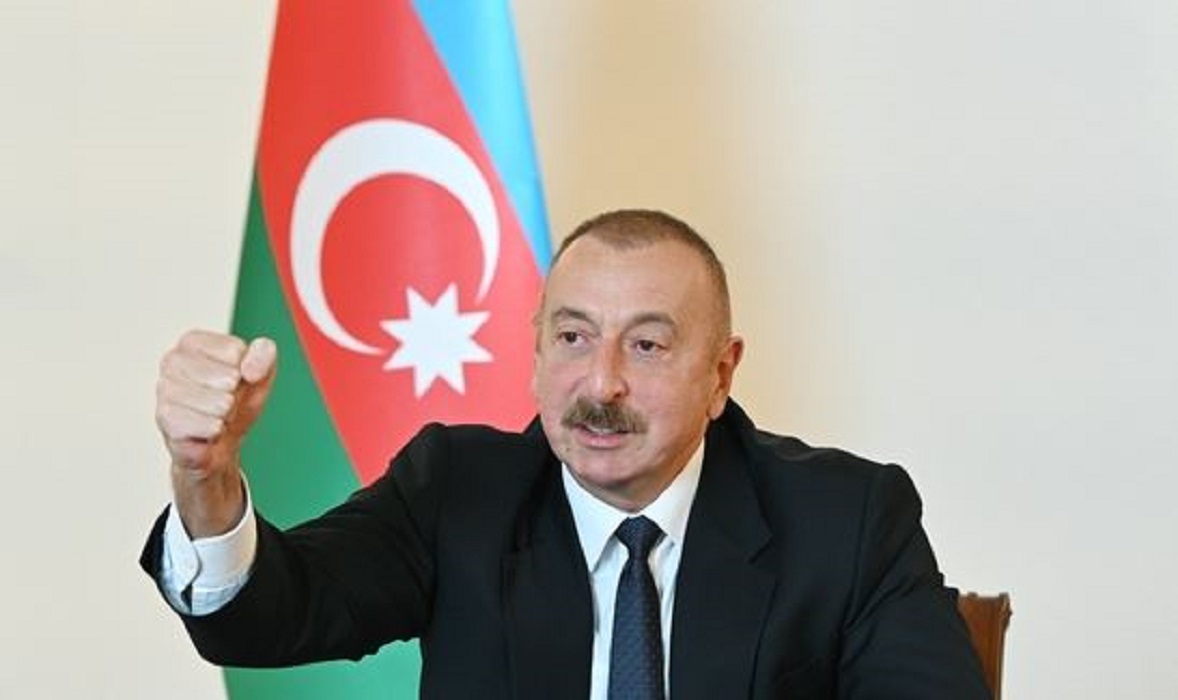
Azerbaijan’s President Ilham Aliyev convened an emergency meeting following the incident and declared that Nakhchivan had been “subjected to cowardly fire.” In a post on the official presidential website, Aliyev described the event as an “ugly terrorist act” and emphasized that those responsible must be immediately held accountable. Parallel to this, he ordered the “highest level of combat readiness” for the national armed forces.
Tehran Denies Targeted Attack on Neighboring Country
Iranian Deputy Foreign Minister Kazem Gharibabadi rejected the accusations. In a statement carried by the Tasnim news agency, he declared:
“The Islamic Republic of Iran has not targeted the Republic of Azerbaijan. We do not target our neighboring countries.”
He added that Iranian policy aims only to strike the military bases of its enemies that are active in the region and used for attacks against Iran – explicitly naming the United States and Israel in this context.
Al Jazeera correspondent Resul Serdar contextualized the incident, reporting that Tehran has long accused the government in Baku of turning Azerbaijan into an “Israeli spy base.” “They accuse Aliyev of undermining Iran’s security from its northern border,” Serdar said. Tehran has repeatedly warned that Azerbaijan would be “punished” if this course were not halted.
Geopolitical Context: The Zangezur Corridor
Nakhchivan, which borders Iran and Türkiye, is part of a peace agreement brokered by the U.S. last year between the former rivals Armenia and Azerbaijan.
The land corridor, officially known as the “Trump Route for International Peace and Prosperity” (TRIPP), granted the U.S. development rights for a connection between Azerbaijan and its Nakhchivan exclave.
Iran has long opposed this transit route, also known as the Zangezur Corridor. Tehran fears losing direct access to Armenia and the rest of the Caucasus, while simultaneously allowing potentially hostile foreign forces to advance directly to the Iranian borders.
Escalation at the Borders and Maritime Losses
The attacks on Azerbaijani territory occur simultaneously with an intensification of fighting in other border regions. U.S. Central Command (CENTCOM) confirmed new airstrikes this Thursday against missile launch sites near the Iranian city of Qom. According to the Iranian Ministry of Health, the death toll from the U.S.-Israeli strikes ongoing since Saturday has now risen to over 1,230.
At the same time, the war is expanding into the Indian Ocean. The U.S. Department of Defense confirmed that an American submarine torpedoed and sank the Iranian frigate IRIS Dena off the coast of Sri Lanka. The warship was on its way back from a naval exercise in India. According to the Sri Lankan Navy, 87 bodies have been recovered so far. Iranian Foreign Minister Abbas Araghchi described the incident as an “atrocity at sea.”
In Tehran, the Islamic Revolutionary Guard Corps (IRGC) also announced today that the Strait of Hormuz is closed effective immediately to ships from the U.S., Israel, and European partner states. This measure has already led to a 70 percent collapse in maritime traffic in the region.
ALSO INTERESTING
– Iran-War –
Iran: Foreign Minister Abbas Araghchi announces “decentralized mosaic defense system”
Analysis of Iran’s “mosaic defense system”: How 31 autonomous units of the IRGC prevent a decapitation strategy and enable long-term wars.
Iran: Foreign Minister Abbas Araghchi announces “decentralized mosaic defense system”