


Ankara – Turkey is preparing to ban a range of single-use plastic products. This move aims to reduce plastic pollution and support the country’s environmental sustainability goals.
The regulation is being prepared by the Ministry of Environment, Urbanization and Climate Change and is expected to come into force by the end of this year. The draft regulation seeks to prohibit the sale and distribution of several commonly used single-use plastic items that contribute significantly to environmental pollution.
Last year, the Ministry published the „2025-2028 National Circular Economy Strategy and Action Plan“ and the „Single-Use Plastics, Marine Litter and Microplastics Roadmap.“ In this context, preparations for the regulation—aimed at reducing the negative effects of single-use plastics, marine litter, and microplastics on the environment and ensuring compliance with the „EU Single-Use Plastics Directive“—have reached the final stage.
Scope of the Ban and Alternatives
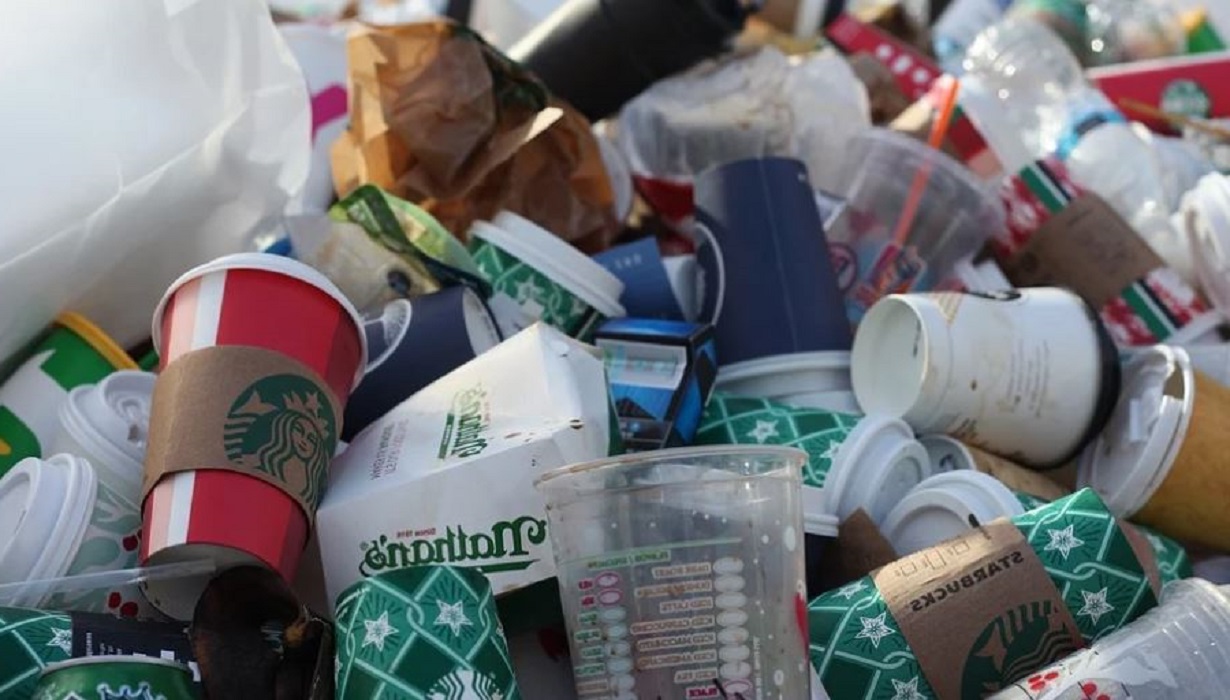
The ban includes plastic forks, knives, spoons, chopsticks, plates, straws, beverage cups, stirrers, and cotton swabs with plastic stems. The proposal also targets food containers and beverage cups made from expanded polystyrene (EPS), commonly known as foam packaging. Authorities plan to encourage the use of environmentally friendly alternatives such as glass, porcelain, wood, and cardboard products in place of plastic items.
In the future, measures such as restrictions and marking are also aimed to be implemented to reduce the consumption of beverage cups and food containers made partially of plastic, cargo bags regardless of size and weight, wet wipes, and wet surface cleaning towels.
Environmental Goals and Expected Impact
This initiative forms part of Türkiye’s broader environmental strategy under the Zero Waste Movement (Sıfır Atık), which focuses on reducing waste generation and increasing recycling rates across the country. The government has already introduced a deposit return system to promote the recycling of beverage packaging.
Officials estimate that eliminating these single-use plastics from the market could prevent approximately 1.5 million tons of carbon dioxide equivalent emissions annually. At the same time, nearly 1.5 billion Turkish lira could be saved in waste management costs.
Statistics on Plastic Consumption
Data from the Turkish Statistical Institute (TÜİK) show that Türkiye consumed 709,348 tons of single-use plastic products in 2022. The detailed breakdown for 2022 includes:
- 2,858 tons of cotton swab sticks
- 32,406 tons of cutlery (forks, spoons)
- 25,584 tons of plates
- 10,234 tons of straws
- 5,117 tons of plastic stirrers
- 63,000 tons of food containers
- 120,000 tons of plastic cups
- 155,935 tons of plastic beverage bottles
Consumption has continued to increase in subsequent years.
Alignment with European Regulations
The regulation is intended to align Türkiye’s environmental policies with the European Union’s Single-Use Plastics Directive adopted in 2019. Several European countries have already implemented similar restrictions:
France: Has banned many single-use plastic products nationwide and achieved comprehensive bans and high recycling targets that go beyond the EU directive.
Germany: Transferred the directive’s provisions almost one-to-one into national law, requests reporting from producers, and supports environmental projects through financial mechanisms such as the „Single-Use Plastics Fund.“
Spain: Implemented sales bans on single-use plastics and encourages sustainable materials through incentives like a tax of 0.45 euros per kilogram on plastic packaging.
Netherlands: Started charging for certain single-use products in 2023 and has been phasing out the sale of some items since 2024.
Ireland: Plans to go beyond the directive by banning wet wipes and single-use service products, as well as a consumption tax on cups („latte levy“).
Italy: Applies the basic bans but creates alternative solutions for food packaging through exemptions for compostable plastics (EN 13432).
Greece: Banned single-use products in the public sector.
Estonia, Latvia, Poland, Slovenia, and Finland: Are working to fully transpose the directive into national laws or implement remaining points.
Public Opinion and Survey Results
A survey conducted during the preparation of the regulation by TÜİK and the Ministry indicates strong public support:
- 77.65% of respondents support reducing the use of single-use plastics in daily life (9.99% do not support).
- 72.52% support buying fewer single-use plastic products (11.68% did not agree).
- 76.40% find it useful to restrict the use of certain products such as straws, plates, cutlery, and cups.
- 60.02% support banning these products altogether.
- 78.71% support the use of alternative products like paper, cardboard, and wood if single-use plastics are restricted or banned.
- 80.12% support moving toward durable products such as metal, porcelain, and ceramics.
The draft regulation is expected to be opened for consultation with public institutions, civil society organizations, and industry representatives in the coming days. After incorporating feedback, authorities plan to finalize the regulation and implement it by the end of the year.
🚮 Türkiye moves to ban single-use plastics under circular economy plan
♻️ A new regulation modeled on the EU’s 2019 Single-Use Plastics Directive aims to curb the environmental impact of certain plastic products https://t.co/XMh3hPtvmr pic.twitter.com/hSayfOPQPM
— Anadolu English (@anadoluagency) March 11, 2026
