



































Polat Karaburan
Recent statements by Iranian Foreign Minister Abbas Araghchi following the death of Imam Khamenei have brought into focus a military structure that is often underestimated in the West.
Araghchi’s reference to the “decentralized mosaic defense system” is not mere rhetoric, but verbal confirmation of a decades-long transformation of Iran’s defense strategy. This doctrine is the result of meticulous observation of modern warfare and painful lessons learned from Iran’s own history.
The school of conflict: learning from enemies and from one’s own hardship
To understand the mosaic system, one must analyze Iran’s strategic isolation and its observation of US-led wars in the neighborhood. For two decades, the Iranian leadership, particularly within the Islamic Revolutionary Guard Corps (IRGC), acted as attentive observers of the US invasions of Afghanistan (2001) and Iraq (2003).
In both conflicts, the Pentagon employed what is known as the “decapitation strategy.” The goal was simple: technological superiority and precision air strikes were to be used to take out the central command and control centers (C2) within hours or days.
In Baghdad, Iran saw how Saddam Hussein’s highly centralized system collapsed as soon as communication between the palace and the generals was interrupted. Without orders from above, the Iraqi divisions ceased fighting or disbanded.
Iran drew the decisive conclusion from this: centralized hierarchies are a fatal weakness in a war against a technologically superior superpower. Added to this were the experiences of the eight-year Iran-Iraq War (1980–1988). Here, Tehran learned that rigid front lines and classic battles of attrition against a foreign-backed enemy exact enormous sacrifices. The solution had to be an asymmetrical, flexible, and above all indestructible structure.
The birth of the mosaic: the 2005 reform
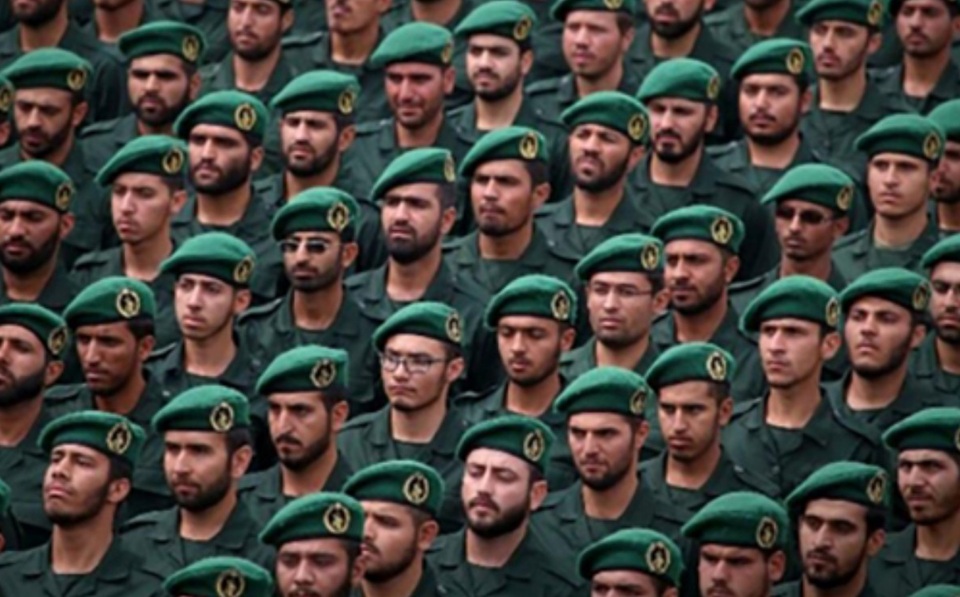
In 2005, when the US presence in Iraq and Afghanistan was at its peak and an invasion of Iran was being discussed as a real possibility, the then commander of the IRGC, Mohammad Ali Jafari, initiated a radical restructuring. The IRGC was transformed from a classic army into 31 independent units – corresponding to the country’s 31 provinces.
This transformation marks the transition to “mosaic defense.” The metaphor of the mosaic is precisely chosen: in a classic military structure, the army functions like a complex clockwork mechanism; if a central cog breaks, the machine stops. A mosaic, on the other hand, consists of thousands of small, separate stones. If one part of the picture is destroyed, the other stones remain untouched and retain their integrity. The overall picture may be cracked, but the substance remains intact.
Operational independence: fighting without a head
The key feature of this system is the complete autonomy of the provincial commanders. In a conventional war, the loss of the top leadership in Tehran—be it the revolutionary leader, the president, or the commander-in-chief of the armed forces—would normally lead to surrender or chaos. In the Iranian mosaic system, the opposite is true.
If headquarters is shut down, the “operational autonomy” protocol automatically kicks in. Each provincial commander of the IRGC has his own weapons arsenal, logistics chains, intelligence services, and Basij militias. They are explicitly trained to make independent military decisions, plan attacks, and wage guerrilla warfare without consulting Tehran.
This strategy makes “decapitation” virtually impossible. An attacker would not only have to take out a central command center, but also defeat 31 separate, highly motivated, and self-sufficient armies at the same time, which are also entrenched in terrain characterized by high mountains and deserts.
Asymmetry and the involvement of society
The mosaic system is inextricably linked to the Basij militia. In each province, the IRGC acts as a cadre for mass mobilization. Defense is “socialized.” This means that the military structure is deeply woven into the civilian structures of the respective province.
The fighters are not defending an abstract line on a map, but their own homeland, their cities, and their neighborhoods. This greatly increases resilience. While a regular army often loses morale after losing its base, mosaic defense seamlessly transitions into a protracted insurgency in such cases. Iran has learned from the mistakes of the US in Vietnam and Iraq:
It is almost impossible to defeat an armed population organized into decentralized cells.
Technological adaptation: cheap, decentralized, deadly
The technological component of mosaic defense reflects its structure. Instead of relying on expensive, centrally maintained weapon systems such as fifth-generation fighter jets, Iran has invested heavily in drones (UAVs) and missile technology that can be produced and stored in a decentralized manner.
A “swarm” of drones can be launched from a hidden backyard in a remote province. The launch pads for ballistic missiles and cruise missiles are distributed throughout the country in underground “missile cities.” Even if communication between provinces is interrupted, each unit can use its own long-range weapons to attack strategic enemy targets, such as aircraft carriers in the Persian Gulf or air bases in the region.
The psychological dimension: deterrence through unpredictability
The mosaic system serves primarily as a deterrent. A potential attacker faces the dilemma that there is no “center of gravity” whose destruction would guarantee victory. The US or Israel could destroy the Iranian air force on the ground and raze government buildings in Tehran to the ground, but the next day they would find that they still face 31 intact opponents spread across the country.
This unpredictability is calculated. The system forces a “long war” (war of attrition), which Western democracies usually shy away from due to domestic political constraints and economic costs. As Araghchi aptly noted, the decentralized structure allows warfare to continue over a very long period of time, regardless of the fate of the political elite.
Topography as a strategic ally
An often overlooked aspect of the mosaic system is the symbiosis between the military structure and Iran’s rugged geography. The country is a natural fortress, characterized by the massive Zagros and Alborz mountain ranges and vast, hostile deserts in the center. The IRGC’s 31 provincial units use this topography to physically separate and protect the “mosaic pieces” from each other.
In the provinces of the Zagros Mountains, for example, each unit specializes in using the narrow passes and cave systems to lure invaders into protracted ambushes. The mosaic doctrine envisions the terrain itself becoming a communication obstacle for the enemy, while local units know every path.
This illustrates the lesson learned from the war in Afghanistan: although the US was able to control the cities, it lost the initiative against decentralized cells in the rugged mountains. Iran has perfected this principle by using state-of-the-art tunnel construction technology to create underground supply routes within the provinces that are immune to bunker-busting weapons.
Transnational expansion: The mosaic beyond borders
However, the decentralized mosaic defense system does not end at Iran’s national borders. It finds its logical continuation in the so-called “Axis of Resistance.” Actors such as Hezbollah in Lebanon, the Houthis in Yemen, and various militias in Iraq function as external mosaic pieces.
These groups are not simply proxies, but are organized according to the same principle of operational autonomy that applies within Iran. Iran observed how, despite its massive technological superiority, the Israeli army failed to crush Hezbollah’s decentralized structures in the 2006 Lebanon War.
The conclusion was clear: if the enemy has to fight autonomous “mosaic cells” on several fronts at once, its striking power is dispersed. If Tehran were to be attacked directly, these external units would react independently of each other, making the costs of escalation incalculable for an attacker.
Industrial self-sufficiency and technological redundancy
Another pillar of this system is the economic and industrial component. A decentralized system can only function if logistics are also decentralized. Over many years, Iran has built up a defense industry geared toward producing spare parts, ammunition, and even complex systems such as drones in smaller workshops scattered across the country.
This is a direct response to the sanctions regime and the observation of global supply chain dependency in modern warfare. While Western armies often rely on a few highly specialized factories, the mosaic system relies on redundancy. Each of the 31 IRGC units has its own depots and workshops that can operate for months without supplies from the capital.
In Ukraine, we have seen how crucial the sheer mass of artillery ammunition and simple drones is. Iran’s mosaic system is designed to generate and manage precisely this mass in a decentralized manner, making it almost impossible to neutralize military strike capability by destroying a few industrial centers.
Psychological warfare and “soft defense”
Finally, the system also encompasses the “soft” dimension of defense. In Iranian military philosophy, the information level is an integral part of the mosaic. Each province has its own media capabilities and cyber units that are trained to act locally in the event of a national communications blackout.
This serves to maintain the narrative of resistance even if the state television stations in Tehran remain silent. The IRGC has learned from the “color revolutions” and social unrest of the past that the stability of the system depends on the steadfastness of its base. The mosaic system therefore also functions as a social immune system: the local presence of the IRGC and the Basij in every village and town is intended to ensure that the enemy’s psychological operations (soft war) bounce off local identity and loyalty.
A legacy of resilience
The activation of this system, as indicated after the death of Imam Khamenei and the attacks on consulates in the region, shows that Iran is in existential defense mode. The mosaic system is the ultimate response to geopolitical encirclement. It is the military manifestation of the will to survive of a state that has been under siege since 1979.
For an invader, the Mosaic system means that there is no “day after victory” because there is no day when the enemy will collectively lay down its arms. Each piece of the mosaic must be broken individually—a task that is militarily and logistically almost impossible to accomplish.
In an era where wars are increasingly decided by endurance and structural resilience, Iran’s mosaic could represent one of the most effective defense models in modern history.
THIS ALSO MIGHT INTEREST YOU
– Turkey –
The Next Turkish President: Hakan Fidan
An in-depth analysis of Turkey’s strategic reality: Why experience, state gravity, and geopolitical foresight are crucial in the question of succession, and why Hakan Fidan represents the logical consequence for the post-Erdoğan era.