














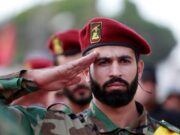







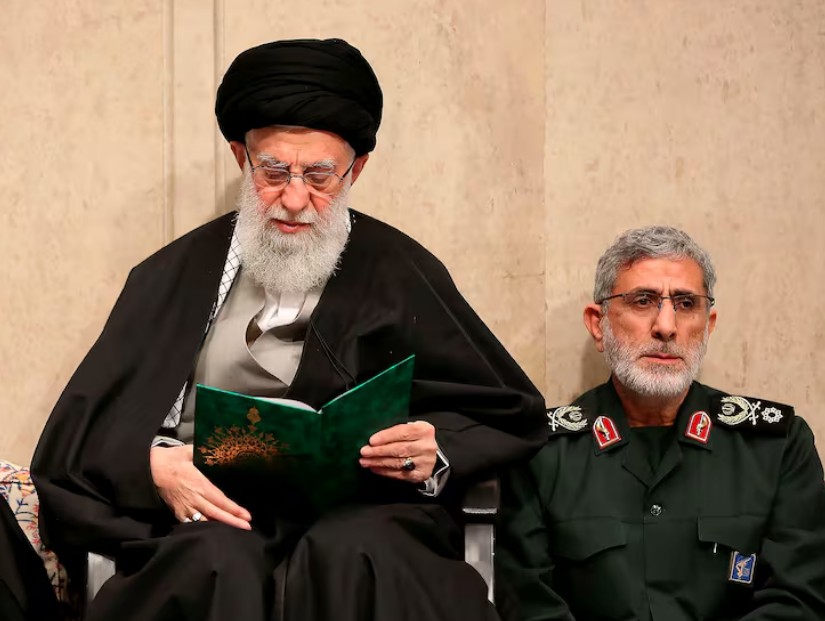
Tehran – Since the devastating strike against the Iranian leadership on February 28, 2026, the commander of the Quds Force, Esmail Qaani, has vanished from the public eye. This has triggered an unprecedented wave of speculation on social media, ranging from arrests for espionage to reports of his execution or a spectacular defection to Israel.
The uncertainty surrounding the whereabouts of the Revolutionary Guard (IRGC) general is becoming a major test for Tehran’s entire regional alliance network.
Unconfirmed Reports of Espionage and Defection
The question of Qaani’s whereabouts remains unanswered. While official sources in Tehran remain silent, reports are spreading that Qaani is a Mossad informant and is already safe on Israeli soil. Claims have surfaced on social media that he was operated under the codename „Agent 47“ and coordinated Israeli airstrikes against the Iranian leadership.
Reports of an official confirmation of his presence in Tel Aviv are circulating, but verifiable evidence or serious official statements are still lacking. Some accounts even shared clearly AI-generated images purportedly showing him receiving an award in Israel.
Archive Material as a Current Proof of Life
In recent hours, pro-Iranian channels circulated a video intended to show Qaani alive and well in Iran. The accompanying message claimed that the general had spent hundreds of days undercover in Israel to scout strategic targets for Iranian retaliatory strikes.
However, an analysis of the visual material reveals that the footage dates back to 2025. It was already used following the „12-Day War“ at that time. The use of archive material in moments of extreme uncertainty is a known instrument used to buy time and suggest the continued operational capability of the „Axis of Resistance.“
Position of Iranian Security Circles
Unofficial statements from Iranian security circles reject the allegations as part of an Israeli psychological warfare campaign. According to these sources, rumors of betrayal are intended to sow paranoia within the Revolutionary Guards. The strategic calculus is simple: forcing Qaani into a public appearance to debunk the reports would allow his current position to be electronically localized for a subsequent targeted strike.
The mistrust is fueled by Qaani’s survival during the attack on February 28. While Ayatollah Khamenei and parts of the IRGC leadership were killed, Qaani remained unharmed. He reportedly left the location just minutes before the missile impact. This pattern has repeated itself in previous attacks on the Hezbollah leadership in 2024, further deepening the suspicions of internal infiltration.
Background: The Career of Esmail Qaani
Esmail Qaani, born in 1957 in Mashhad, joined the Revolutionary Guards in 1979. His military career began during the Iran-Iraq War of the 1980s as commander of the 5th Nasr Brigade. For over two decades, he served as the deputy to Qasem Soleimani. While Soleimani led operations in the Arab world, Qaani was responsible for Iran’s eastern interests in Afghanistan and Pakistan. Among other things, he coordinated the „Fatemioun Division,“ a militia of Afghan Shias, and integrated them into Tehran’s regional strategy.
Succession and the Security Situation under Qaani
Following the killing of Soleimani by a US drone in January 2020, Qaani took over supreme command within hours. Unlike his predecessor, he lacked a close personal bond with regional militia leaders.
His tenure has been marked by repeated security breaches. The assassination of Ismail Haniyeh in Tehran in 2024 and the systematic elimination of the Hezbollah leadership in Lebanon occurred during his term. Critics within the IRGC have accused him of neglecting counter-espionage in favor of logistical tasks.
The Current State of the Information War
The figure of Esmail Qaani stands at the center of conflicting narratives. In the past, he was declared dead several times, only to return to the public eye later. However, the extent of the current allegations—from AI-generated images of an award ceremony to heroic tales of undercover missions—makes the situation in March 2026 appear uniquely uncertain.
Whether this is a disinformation campaign or an internal purge remains unclear. The stability of Iranian power structures and the regional alliance system depends on clarifying his whereabouts. While pro-Israeli channels celebrate him as a defector, pro-Iranian sides respond with old footage. The outcome of this information war will have a lasting impact on the power structure in the Middle East and may mark the end of an era in Iranian foreign policy.
THIS ALSO MIGHT INTEREST YOU
– World –
The Economist: Erdogan most popular politician in the Muslim world
Analysis from The Economist and Arab Barometer confirms President Erdogan is the leading voice for the world’s 2 billion Muslims, a journey that began with his 2009 Davos protest.
The Economist: Erdogan most popular politician in the Muslim world