


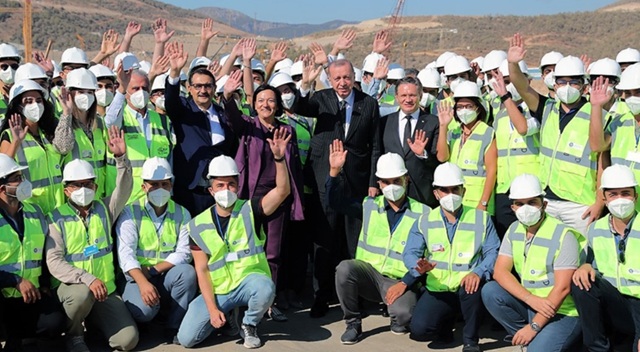
Ankara – Turkey is facing a monumental challenge in its energy policy and is responding with a massive expansion of its nuclear capacities. As Energy Minister Alparslan Bayraktar confirmed on March 18, 2026, the government is currently evaluating the construction of four new nuclear power plants.
To this end, the country is engaged in intensive discussions with several international partners, including South Korea, Canada, China, and Russia. These strategic negotiations are primarily focused on the potential sites in the regions of Sinop and Thrace.
Fastest growth in energy demand
The background to these ambitious plans is an energy hunger that is unparalleled among OECD nations. Over the past two decades, Turkey has recorded the fastest growth in energy demand within this group of countries. Driven by rapid industrialization and steady population growth, electricity demand reached a historic high of 342 TWh in 2024.
In particular, increasing heatwaves and the resulting surge in air conditioning usage have repeatedly led to new records in peak consumption during the summer months. Experts predict that this trend will continue: by 2030, demand is expected to reach approximately 400 TWh, potentially rising to over 500 TWh by 2035.
To manage this immense load while simultaneously reducing dependence on costly fossil fuel imports, Ankara is pursuing a hybrid path consisting of renewable energies and nuclear power. Although solar energy has seen an impressive upswing recently—covering 32% of the increase in electricity generation in 2024—baseload capability remains the core issue. Currently, the country is still heavily dependent on imported coal and gas. The government aims to change this status quo drastically by 2035, intending to reduce the share of fossil fuels in electricity generation to below 20%.
Akkuyu Power Plant
In this context, nuclear expansion is considered indispensable. While the first nuclear power plant in Akkuyu, built in cooperation with the Russian company Rosatom, is nearing completion and is expected to cover 10% of the national demand, the projects in Sinop and Thrace represent the next stage of development.
Turkey is not merely seeking the construction of these facilities but places the highest value on technology transfer and the involvement of local industry to ensure long-term autonomy. The ultimate goal is to have a total nuclear capacity of 20 gigawatts connected to the grid by the year 2050.
Energy Export
Despite the high domestic demand, it is noteworthy that Turkey already became a net exporter of electricity in 2024, highlighting the improved infrastructure and efficiency of its newer plants. Parallel to these efforts, the country is investing heavily in energy efficiency, aiming for a 16% reduction in primary energy consumption by 2030.
The combination of massive wind and solar capacities—with a target of 120 GW by 2035—alongside stable nuclear power is intended to establish Türkiye as a regional energy hub and a pioneer of green transformation in the Mediterranean.
JUST IN: 🇹🇷 Turkey in talks to build four nuclear power plants. pic.twitter.com/EeHi3hIfTJ
— sustainme.in®️ (@sustainme_in) March 18, 2026
AUCH INTERESSANT
– Energie –
Türkei: Energiexporte steigen um 560 Prozent
Die Türkei hat einen bemerkenswerten Meilenstein in ihrem Energiesektor erreicht: Die Erdgasexporte sind in den letzten Jahren um 560 % gestiegen
