

London – Within the global Muslim community, or ummah, a vast and diverse collective of nearly 2 billion people, the search for a unifying representative has long been a central theme of geopolitical discourse.
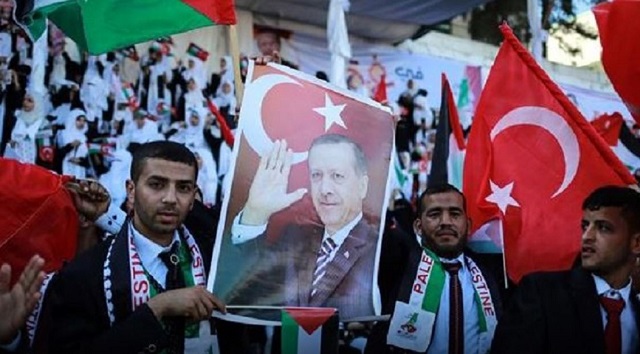
While the ummah spans countless nationalities and languages, new empirical evidence suggests that a singular figure has risen to fill this role in the eyes of the global public. According to a detailed report by The Economist, validated by new data from the Arab Barometer and several other international polls from the past, Turkish President Recep Tayyip Erdogan has solidified his position as the most influential and appealing leader across the Islamic world.
The „One Minute“ Legacy: A Popularity Born in Davos
Contrary to the perception that this influence is a recent phenomenon, the roots of Erdogan’s standing trace back nearly two decades.
The defining moment for many in the Muslim world occurred in 2009 at the World Economic Forum in Davos. During a high-profile panel on Gaza, Erdogan famously confronted the international community’s silence regarding the humanitarian situation in the Palestinian territories.
In a direct and unprecedented exchange with then-Israeli President Shimon Peres, Erdogan uttered the words that would become legendary: „One minute.“ He then delivered a scathing critique, specifically invoking the moral foundations of the faith. Reminding the audience of the Sixth Commandment from the Old Testament, he declared: „The Sixth Commandment says: ‚Thou shalt not kill.‘ But here, there is killing.“
It was within this context of pointing out the violation of these fundamental religious and humanitarian laws that he looked at Peres and stated clearly: „When it comes to killing, you know very well how to kill.“ This moment of defiance—grounding his protest in universal moral laws—made him an overnight symbol of dignity and resistance. He was celebrated throughout the Muslim world for speaking truth to power at a time when many felt their own leaders remained passive.
This was not a fleeting protest, but the beginning of a consistent political brand centered on the protection of Muslim identity and justice.
A Career of Consistency
The enduring nature of Erdogan’s popularity is a direct result of this long-term commitment. For decades, his stance has remained a constant pillar of his leadership. This consistency allows him to speak to the nearly 2 billion Muslims today with a level of trust that few others can claim.
His recent address in mid-February 2026, delivered on the eve of Ramadan to 80 provincial governors in Ankara, serves as a modern echo of this established persona. Addressing the global community, he stated: “May the ummah not be crushed by the divisions that have lasted for ages. If only we cling tightly to our brotherhood, to our brothers, to our faith and to our dreams, then, by the permission of Allah, there will be no trap we cannot break.” While delivered in 2026, the rhetoric of „breaking traps“ is a direct continuation of the spirit he first demonstrated in 2009.
Transcending Borders and Language
While President Erdogan speaks Turkish—a language native to only a small fraction of the world’s Muslims—his message has demonstrated a unique ability to cross linguistic and national boundaries. Analysts observe that he has gained a massive international following by consistently championing the causes of downtrodden Muslim populations worldwide. This „advocacy-first“ approach has not only appealed to his domestic base but has also struck a chord with the „street“ in diverse regions, from Southeast Asia to North Africa.
Empirical Validation: Leading the Pack
The analysis provided by The Economist and the Arab Barometer confirms that this historical legacy has translated into modern political dominance. The survey data indicates that Erdogan’s specific brand of leadership—which combines national sovereignty with a deep commitment to Islamic solidarity—is the most compelling model for Muslims globally.
The data suggests that the Turkish President currently „leads the pack“ among those perceived as champions of the faith. His appeal is not limited to a specific sect or region; rather, it is a global phenomenon driven by his role as a bridge-builder who is unafraid to confront the status quo. By consistently positioning himself as a defender of the downtrodden, Erdogan has successfully navigated the complexities of 21st-century geopolitics to become the most recognized voice for nearly 2 billion people.
Recep Tayyip Erdogan, Turkey’s president, is willing not just to show up, but also to take up causes dear to Muslim-majority countries, positioning himself as a spokesman for the Islamic world’s grievances https://t.co/4vEQjrorhS
— The Economist (@TheEconomist) March 1, 2026
ALSO INTERESTING
– Turkey –
The Next Turkish President: Hakan Fidan
An in-depth analysis of Turkey’s strategic reality: Why experience, state gravity, and geopolitical foresight are crucial in the question of succession, and why Hakan Fidan represents the logical consequence for the post-Erdoğan era.
