


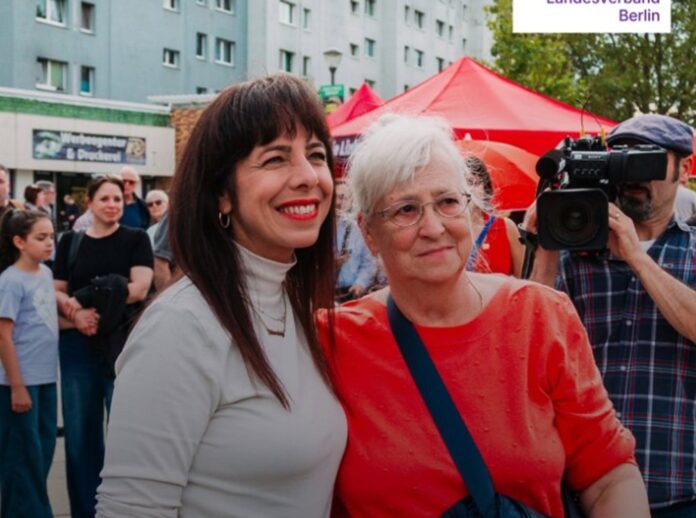
Berlin – Following the historic outcome of the Berlin state election on September 20, in which Die Linke emerged as the largest political force, Josef Schuster, President of the Central Council of Jews in Germany, has issued a sharp warning against allowing the party to form a government. Schuster urged both the Social Democratic Party (SPD) and the Green Party to refuse any coalition agreements involving Die Linke, citing what he characterized as serious antisemitic transgressions during the election campaign.
Schuster expressed profound concern over the election results, pointing to specific campaign incidents that he argued crossed acceptable boundaries. He noted that the fact that a party on whose campaign stage the deaths of human beings were openly demanded emerged victorious deeply alarmed him.
He specifically highlighted a campaign event where calls for an intifada and the deaths of Israeli soldiers were reportedly voiced, while members of the audience sang and danced in response. Based on these events, Schuster accused Die Linke of tolerating antisemitic positions within its ranks, asserting that the party has lost its credibility in combating hatred against Jewish people. He strongly appealed to the SPD and Greens not to assist Die Linke in taking power at Berlin’s Rotes Rathaus.
The Left Rejects Allegations
Die Linke has firmly rejected the accusations. Prominent party figure Bodo Ramelow stated he had zero understanding for Schuster’s demand, pointing to the commitment of Berlin’s lead candidate, Elif Eralp, and her announced measures to combat antisemitism. Similarly, party leader Heidi Reichinnek emphasized that Die Linke maintains a clear stance against antisemitism, reassuring the public that individuals who cross this boundary have no place within the organization.
Meanwhile, potential coalition partners have not ruled out cooperation entirely, though they have set strict boundaries. Green Party lead candidate Werner Graf asserted that no coalition would exist under his leadership that included antisemites. SPD lead candidate Steffen Krach echoed these sentiments, declaring that individuals harbouring antisemitic views would not be permitted to serve in the state senate.
Election victory despite months of debate over Gaza
The outcome of the election also sparked intense debate regarding the political impact of the Gaza conflict on domestic politics. Journalist Loren Balhorn argued that months of media scrutiny regarding alleged antisemitism within Die Linke over its stance on Palestine ultimately failed to diminish the party’s electoral appeal.
Balhorn noted that efforts by the media establishment to frame the party as antisemitic had proven unsuccessful, suggesting that condemning Israeli military policies and the situation in Gaza no longer functions as a political liability for Die Linke—a perspective standing in direct contrast to the position held by the Central Council of Jews.
With Die Linke securing 25.3 percent of the vote according to Reuters, the political situation remains fluid as formal coalition talks between Die Linke, the SPD, and the Greens are set to begin.
Another important takeaway from Berlin: the weeks-long campaign by the German media establishment to brand Die Linke as antisemitic due to its (frankly lukewarm) support for Palestine utterly failed. Condemning the genocide in Gaza is no longer a political liability in Germany.
— Loren Balhorn (@fraubalhorn) September 20, 2026
